pattu pavada for girls by age
How to Choose a Pattu Pavada by Age
A pattu pavada is a traditional South Indian skirt-and-blouse outfit, also called a pattu langa or pavadai in different regions. Age is a helpful starting point when choosing one for a child, but it should never replace checking the garment measurements, fabric feel and the child's comfort.
Practical guide from Ethnic Collections, India.
Start with the child, not only the age label
Age labels are convenient when browsing, yet children of the same age can have very different heights, waist measurements and proportions. Treat an age range as a first filter, then ask for the actual waist, skirt length and blouse measurements. If you are buying online or ordering over WhatsApp, confirm which measurement is taken on the garment and which is the child's body measurement. A clear answer prevents the disappointment of an outfit that looks right in a photograph but does not fit comfortably.
For younger children, ease of movement matters especially. They may sit, walk, play and be carried during a long family function. Check whether the waistband feels soft, whether the lining is comfortable and whether the blouse allows normal arm movement. A festive pattu pavada should feel special without making the child tug at it throughout the occasion. Ask the seller about closures, seam finish and any decorative pieces that could scratch delicate skin.
Toddlers and preschool children
For toddlers and preschoolers, look for a light, manageable skirt and a blouse that is easy to put on. A very heavy skirt may be difficult for a small child to wear for several hours, so compare the garment weight and construction rather than judging only by the amount of embroidery in a product photo. A secure waistband and a suitable lining can make a big difference. If the outfit is for a first birthday, naming ceremony or temple visit, plan for comfort during sitting, meals and rest as well as for photographs.
Choose designs with secure finishing and avoid loose embellishments that may detach. Keep jewellery and accessories age-appropriate, and follow the garment maker's cleaning instructions after the event. When ordering, share the child's current measurements and the date of the occasion. This helps the shop recommend an available size and explain whether there is enough time for an adjustment. A retailer should not promise a fit based on age alone when measurements are missing.
School-age girls and growing children
For school-age children, involve the wearer in selecting colours and details. A child who likes the outfit is more likely to wear it happily through a festival or wedding. Check skirt length while standing and sitting, and make sure the blouse is not restrictive at the shoulders or underarms. If the child is between sizes, ask whether the waistband has adjustment room and whether a small alteration is practical. Do not automatically choose a much larger size for future growth: excessive length can be uncomfortable and may create a tripping hazard.
Growth can be quick, so note when the measurements were taken and whether there is a long gap before the event. For an outfit needed months later, ask the retailer how much adjustment is possible rather than guessing. A well-made pattu langa can sometimes be altered, but construction and embellishment affect what can safely be changed. Keep the original care label and any spare fabric or fastening supplied with the set.
Teenagers and half-saree styles
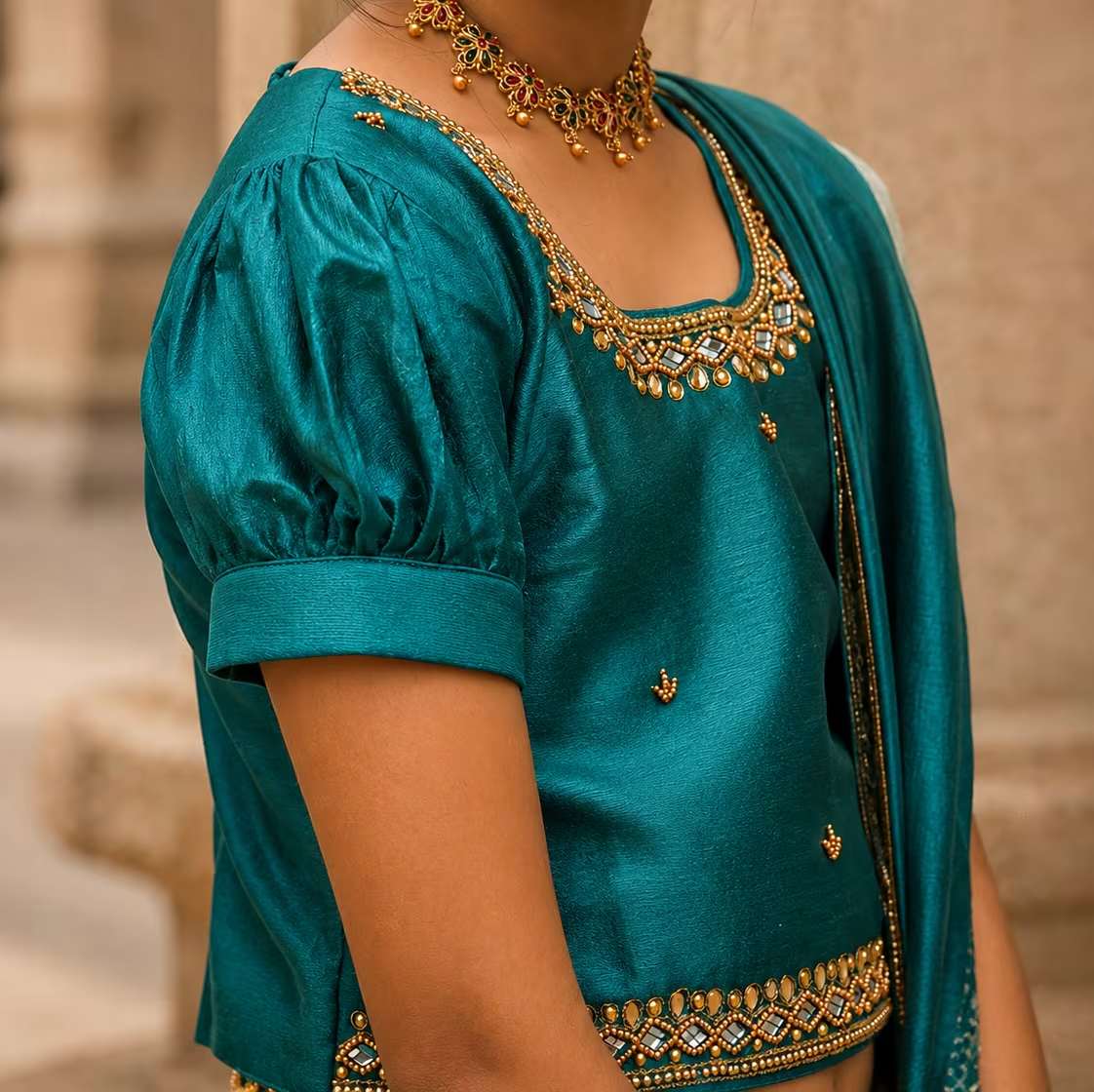
Older girls may prefer a more structured blouse, a longer skirt or a coordinated davani for a half-saree look. Regional names include langa davani, langa voni and pavadai sattai; families use these terms differently, so describe the exact pieces you need instead of relying on the name alone. Confirm whether the order includes a skirt, blouse and drape, and ask for photographs of the actual colour combination. The fit of a blouse can depend on several measurements, so allow time for a fitting or tailoring discussion.
For a formal celebration, the wearer can help balance traditional styling with personal preference. A contrast blouse, a classic border or a lighter palette can all work, depending on the event. Consider how the outfit will be worn with footwear and accessories, and whether the drape needs to stay secure through movement. Customers anywhere in India can share measurements and arrange a video or photo consultation to discuss fit.
Match the outfit to the occasion and weather
A wedding, temple festival, school programme and family birthday have different practical needs. For a short ceremony, a more decorative set may be suitable; for an all-day event, breathable lining, manageable weight and comfortable fit should carry more importance. Check the venue and season too. Outdoor events in warm weather call for a garment the child can wear without overheating. Ask what the fabric is made from and do not assume that a fabric described as silk-look is pure silk. Honest material details help families make the right choice.
Plan the complete outfit before the event. A matching blouse, drape and skirt create a coordinated look, but each piece should be checked for fit and finish. Keep a familiar change of clothes available for very young children, particularly when the celebration is long. For a pattu pavada for girls, photographs show styling but cannot tell you the exact feel, weight or measurement; ask specific questions before confirming an order.
A quick measurement and buying checklist
Before buying, record the child's waist, skirt length and blouse measurements using the seller's instructions. Confirm the size chart unit, the measurement tolerance and the pieces included. Ask about lining, fabric composition, closures, care, dispatch date and alteration options. Share the event date and location so delivery can be planned realistically. Read the shop's exchange or defect policy before payment, and save the order confirmation and the product details agreed with the seller.
If you are comparing several pattu pavada designs, compare like with like: material, included pieces, finishing, size support and delivery terms. A lower price is not necessarily a better value if important pieces or alterations are excluded. Conversely, embellishment alone does not guarantee quality. Ask for current photographs and clear descriptions. Families can browse the girls' pattu pavada collection, while boutiques sourcing for customers can review wholesale pattu pavada ordering.
Where to shop and what to ask
Choose a seller who responds clearly about sizing and does not claim that one standard size fits every child. Ask whether the displayed item is in stock, whether the photograph represents the delivered design and how colour variation may appear on different screens. Ask the seller about fabric and fit questions before ordering. Ethnic Collections serves families and trade buyers across India.
A pattu pavada, pattu pavadai or pattu langa is ultimately an outfit for a real child and a real occasion. Take measurements, prioritize comfort, verify what is included and leave enough time for any adjustment. With those basics covered, choosing a colour and border becomes the enjoyable part. For help with available sizes, browse the collection or contact our team with the event date and measurements.
Frequently asked questions
Should I choose a pattu pavada by age or measurements?
Use the age range as a guide, then confirm the child's waist, skirt length and blouse measurements against the seller's size chart.
Can I buy a larger pattu pavada for a child to grow into?
Avoid choosing a much larger size without checking length and fit. Ask the seller whether the waistband or blouse can be adjusted safely.
What is another name for pattu pavada?
Depending on region and outfit style, families may use pattu langa, pattu pavadai or pavadai sattai. Confirm which pieces are included.
Ethnic Collections serves customers across India. Explore pattu pavada for girls or learn about wholesale pattu pavada.