wholesale pattu pavada for boutiques
Wholesale Pattu Pavada: A Boutique Buying Guide
Sourcing wholesale pattu pavada and pattu langa for a boutique is more than finding a low unit price. Retailers need clear specifications, dependable communication, a suitable size mix and realistic dispatch plans. This guide outlines questions to ask a manufacturer before placing a first order or planning a festive assortment.
Practical guide from Ethnic Collections, India.
Define the customer and assortment first
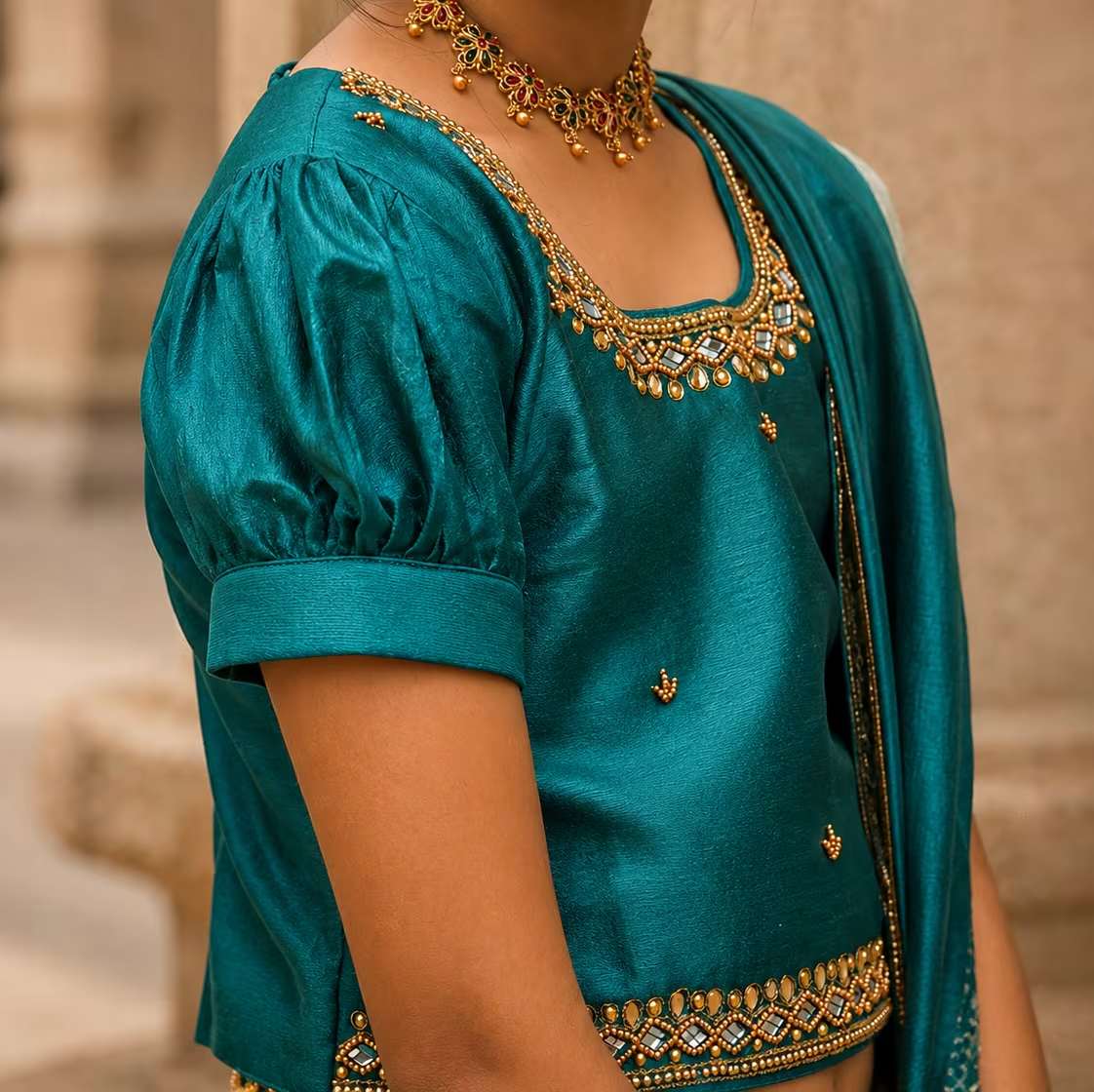
Start with the customers your boutique serves. Consider age range, local preferences, price points, event season and the styles already available in your store. A focused assortment is easier to explain and replenish than a large collection chosen only because the photographs look attractive. Decide whether you need pattu pavada sets for younger girls, pattu langa for older customers, blouse options or half-saree styles such as langa davani.
List the design categories, colours and size range you want, then determine how many pieces fit your budget and floor space. Ask your existing customers what they look for and use sales data from previous seasons where available. Do not assume every South Indian market has identical demand. A manufacturer can explain its available range, but the boutique should make the final assortment decision based on its own customers.
Compare suppliers on specifications, not claims
Ask each supplier for product specifications: fabric description, lining, border and embellishment details, included pieces, garment measurements and care instructions. Request current photographs, ideally showing the actual available design and close-ups of finishing. If samples are available, clarify their cost and whether the sample fee is credited to a later order. Never assume that the words silk, pattu or premium mean the same thing across suppliers.
A reliable supplier should answer questions plainly and provide written terms. Ask how stock availability is confirmed, what happens if a design becomes unavailable, and how substitutions are approved. Confirm whether a product photo is representative or exact. For repeat buying, clarify if the same colour and finish can be produced again. Consistency matters when customers return to purchase a matching size or when a boutique wants to reorder a popular design.
Understand MOQ and size mix
Minimum order quantity can apply per design, colour or total order. Ask which rule is used and whether sizes and styles may be mixed. A low total MOQ may still be restrictive if all pieces must be identical. Confirm how the supplier counts a set, whether a blouse is included, and what happens if the requested size is out of stock. Put the approved size and colour breakdown in the purchase order.
Plan sizes using your own demand rather than ordering equal quantities automatically. A boutique can begin with a modest assortment, track enquiries and sales, and use that information for replenishment. Confirm whether the manufacturer accepts mixed-size reorders and whether a repeat batch has a new lead time. A clear size chart helps staff answer customer questions, especially when labels differ from other brands.
Calculate total landed cost and margin
Compare the complete landed cost: unit rate, shipping, taxes if applicable, packaging, payment charges and any alteration or customization fees. Then model your planned retail price and margin. Include likely markdowns, damaged stock risk and the cost of holding inventory. A low supplier price may not be the best value if freight is high, specifications are inconsistent or the lead time misses the selling season.
Ask for a written quote with validity date, currency, quantity, unit price, payment terms and delivery assumptions. Confirm whether the stated price is per complete set or an individual piece. The manufacturer's published wholesale tiers are a guide to its stated offer and can change; verify them for the current products and order. The B2B wholesale page provides a starting point for discussing trade requirements.
Check production and delivery timelines
A delivery timeline has several parts: order confirmation, production if needed, quality check, packing, dispatch and courier transit. Ask which dates the supplier can control and whether an item is in stock or made to order. Share the date you need inventory in the store, not just the festival date. Build a buffer for transit and inspection. A supplier should give a realistic estimate, but external courier delays cannot be eliminated entirely.
For seasonal products, place orders early and agree how the supplier will communicate any delay or stock issue. Confirm whether partial dispatch is possible and whether it changes shipping cost. Keep a contact person and the order reference. When cartons arrive, inspect quantity and condition promptly, compare items with the order and photograph any discrepancy before displaying or repacking products.
Agree quality checks and problem handling
Before ordering, ask how products are checked and what the supplier considers a defect. Clarify the time allowed to report an issue, the evidence required and the available remedy. Get the policy in writing. Inspect stitching, closures, hems, lining, embellishments, stains and size labels when the shipment arrives. Do not remove tags or alter goods until you have completed the incoming check.
Quality expectations should be specific enough to inspect. A retailer and manufacturer may use different interpretations of colour, finish or acceptable variation, so share references and agree any tolerance in advance. If a problem occurs, communicate promptly and provide the order number, affected quantity and clear photographs. A fair, documented process supports a long-term supplier relationship better than informal assumptions.
Build a practical supplier relationship
A wholesale relationship works best when both sides share information early. Boutiques should provide clear product references, quantity, size mix, delivery address and required date. Manufacturers should confirm availability, quote terms and production status. Establish how reorders are placed and how design updates are communicated. Discuss private labels or custom packaging only after the supplier confirms feasibility, minimums, artwork requirements and lead time.
Avoid making customer promises based on unconfirmed stock. Keep a written purchase order and save the supplier's confirmation. Review sell-through after the season and use those insights to refine the next order. For a first order, start at a scale that lets you evaluate product consistency, communication and customer response without overcommitting capital.
Questions to send before placing an order
A concise supplier enquiry can ask: What designs and sizes are currently available? What is the MOQ and can styles or colours be mixed? What fabric and pieces are included? Are samples available? What are the unit price, shipping, payment and dispatch terms? How are defects or shortages handled? Can the supplier support a repeat order? Include the boutique name, destination postcode, requested quantity and timeline so the response can be specific.
Ethnic Collections manufactures traditional girls' wear in India and serves boutiques nationwide. Trade buyers can review wholesale pattu pavada options and contact the team with their range and delivery needs. Families can find retail designs through pattu pavada for girls. Careful supplier comparison helps protect stock investment and gives customers a clearer buying experience.
Frequently asked questions
What MOQ should a boutique expect for wholesale pattu pavada?
MOQ varies by supplier and may apply per design or across an order. Confirm the current minimum and whether sizes or colours can be mixed.
What should I ask a pattu pavada manufacturer before buying?
Ask about fabric, included pieces, measurements, MOQ, mixed sizes, price, dispatch, shipping and written defect or exchange terms.
Can boutiques order mixed sizes and designs?
Some suppliers permit mixed orders, but the rules vary. Confirm the exact design and size breakdown in the written quote.
Ethnic Collections serves customers across India. Explore pattu pavada for girls or learn about wholesale pattu pavada.